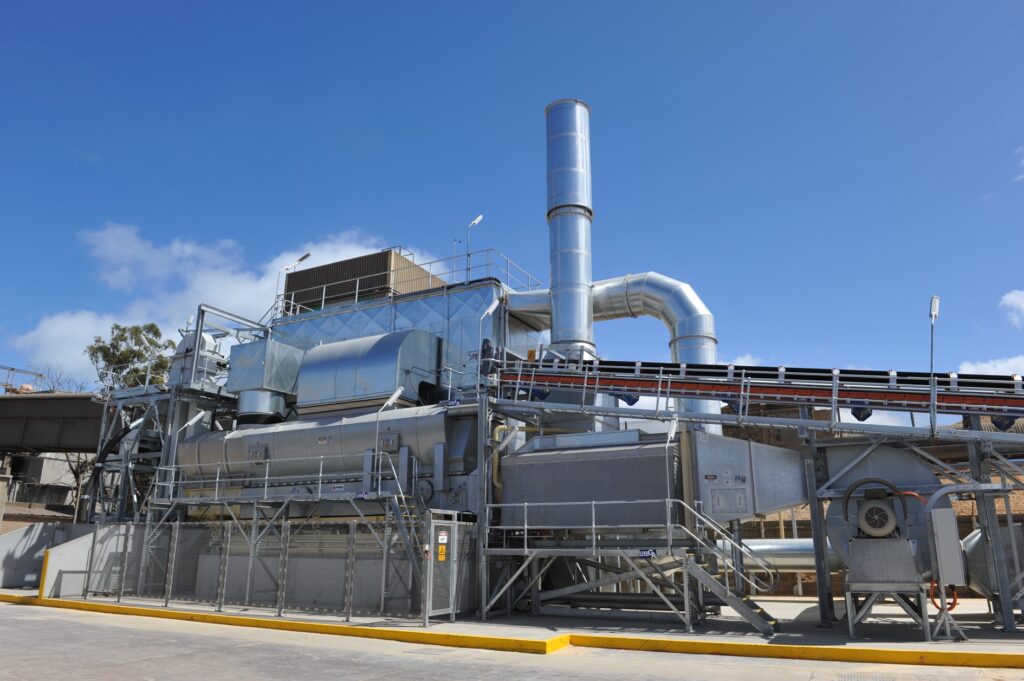
High-efficiency fluid bed dryers for frac sand
Frac sand producers are under increasing pressure to reduce energy consumption while maintaining consistent product quality. A fluid bed dryer offers a highly efficient and controllable alternative to traditional rotary dryers, enabling stable final moisture, lower operating costs and reliable performance across capacities from 10 to 250+ TPH.
- Significantly lower energy consumption compared to rotary dryers
- Consistent final moisture for stable product quality
- Heavy-duty design for continuous high-capacity operation
- Simple and reliable operation with intuitive controls
Frac sand drying is under pressure
As energy prices continue to rise, drying efficiency is becoming a critical factor in frac sand processing.
Many frac sand plants have relied on rotary dryers for years. While proven, today’s market requires more control, efficiency and flexibility.
Producers are increasingly focused on:
- Reducing energy consumption per ton
- Achieving stable and predictable moisture levels
- Improving emissions and dust control
- Upgrading existing drying systems instead of full replacement
Across plants ranging from 10 TPH to over 250 TPH, the same conclusion is often reached:
Frac sand drying systems offer more optimization potential than expected.
Get in touch
Fluid bed drying: a more efficient approach
A fluid bed dryer for frac sand uses controlled airflow to suspend and evenly dry the material. This results in significantly improved heat transfer compared to rotary drying.
The result:
- Lower energy consumption
- Uniform drying across all particles
- Precise control over final moisture
For frac sand producers, this means a more stable and efficient drying process.
See how fluid bed drying works
Understanding the drying principle is key to evaluating the performance of a fluid bed dryer in frac sand applications.
In this short video, we explain how controlled airflow ensures efficient heat transfer, uniform drying and precise moisture control.
Why choose a fluid bed dryer for frac sand
Lower energy consumption per ton
Fluid bed drying systems are known for their high thermal efficiency.
Compared to rotary dryers, this results in:
🔸Reduced fuel usage
🔸Lower operational costs
🔸Improved energy performance per ton of dried frac sand
Reliable final moisture and product consistency
In frac sand applications, consistent moisture content is critical for storage, transport and downstream use.
Fluid bed drying ensures:
🔸Accurate moisture control
🔸Uniform product quality
🔸Stable plant performance
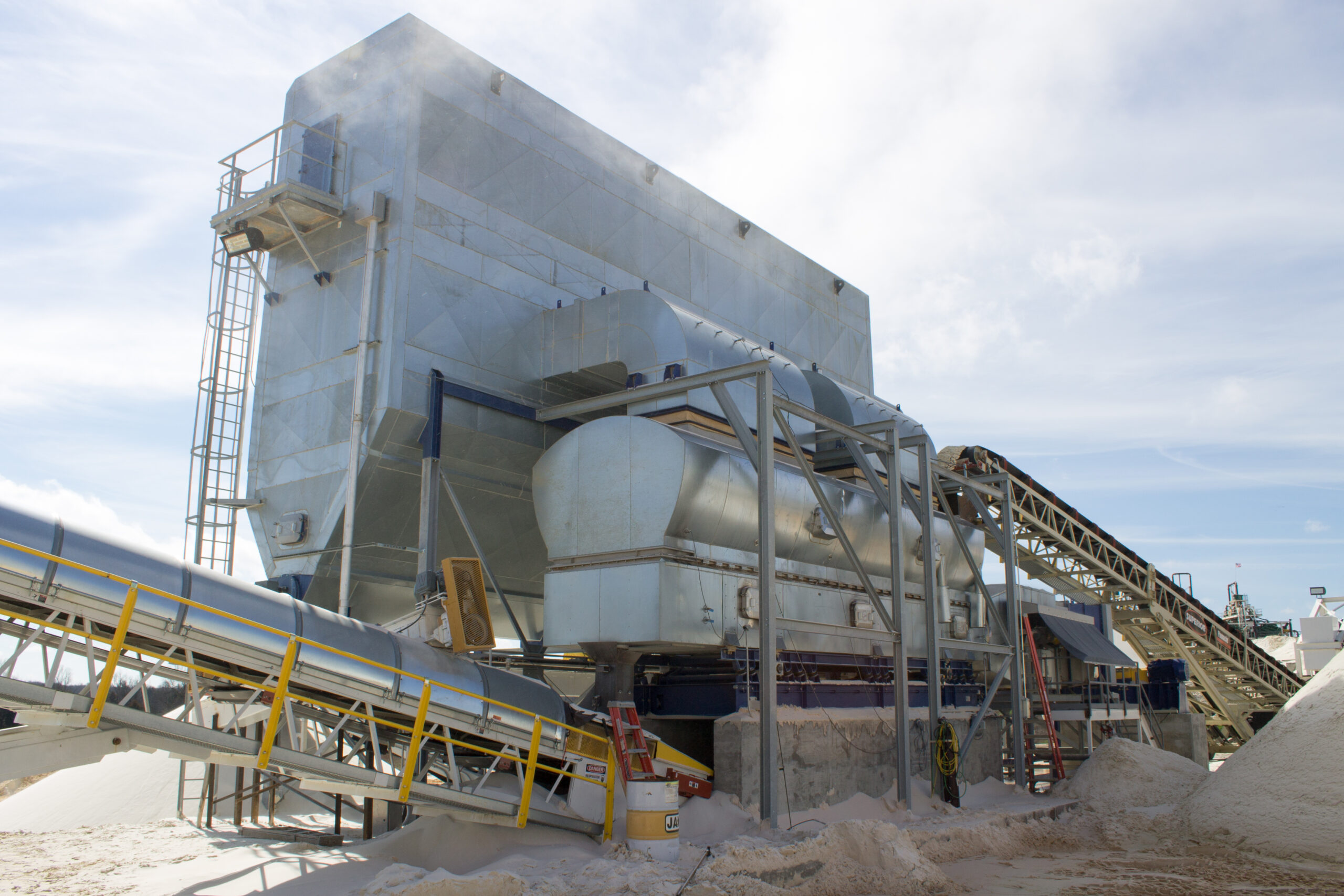
Heavy-duty design up to 250+ TPH
Frac sand drying requires robust equipment that can handle abrasive materials and continuous operation.
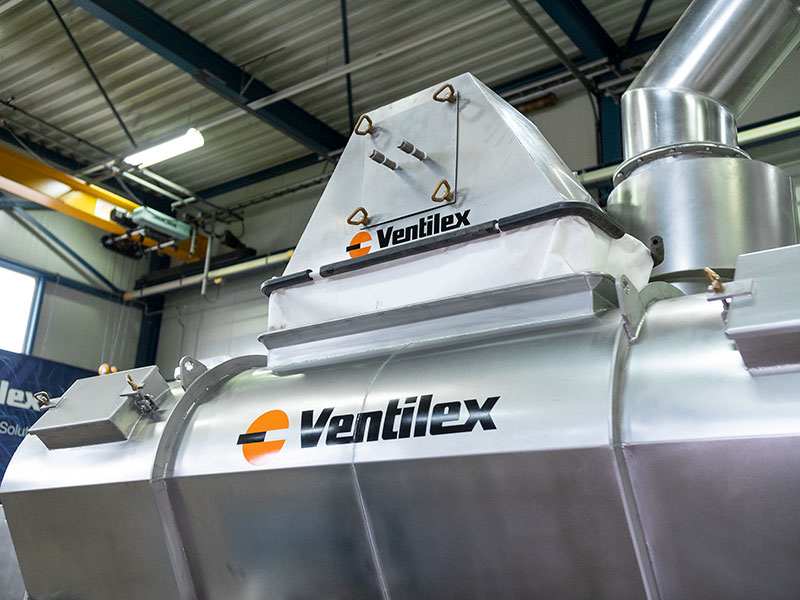
Ventilex fluid bed dryers are designed for:
🔸Capacities from 10 to 250+ TPH
🔸Continuous industrial operation
🔸Long service life in demanding environments
Simple operation and intuitive control
Advanced drying technology should not increase operational complexity.
Our systems are designed for:
🔸User-friendly controls
🔸Easy monitoring and adjustment
🔸Reliable operation with minimal operator dependency
Upgrade existing frac sand drying systems
Not every plant needs a completely new drying installation.
In many cases, improvements can be achieved by:
🔸Optimizing the existing drying process
🔸Integrating a fluid bed dryer into current lines
🔸Upgrading specific components
This allows producers to improve performance without full replacement.
Efficient sand drying with proven energy performance
Ventilex supplied and commissioned a Ventura two-stage fluid bed dryer for Asia Cement, designed to replace an existing drum dryer and significantly reduce energy consumption. The system handles challenging materials such as sea sand with high clay content, delivering stable and reliable drying performance.
The installation performs in line with the projected heat consumption levels, contributing directly to lower operational costs and confirming the effectiveness of the selected design.
Customer perspective
“We would like to express our sincere gratitude to the Ventilex team for their professional support in sales, technical, and related areas. The Ventura (two-stage fluid bed dryer) system meets the agreed performance criteria and operates reliably. We are highly satisfied with the performance of the dryer, particularly in terms of its energy and heat consumption. The cooperation throughout the project was professional and solution-oriented, ensuring a smooth transition to operation.”
— Mr. Lim, Asia Cement
Fluid bed dryer vs rotary dryer in frac sand drying
| Feature | Fluid bed dryer | Rotary dryer |
|---|---|---|
| Energy consumption | Low | High |
| Moisture control | Highly precise | Variable |
| Product uniformity | Excellent | Moderate |
| Footprint | Compact | Large |
| Process control | Stable & automated | Operator dependent |
Frac sand drying capacity: from 10 to 250+ TPH
Every frac sand plant is different. That is why drying solutions must match the required capacity and process conditions.
Ventilex supports:
- Smaller plants around 10 TPH
- Mid-size frac sand operations
- Large-scale installations exceeding 250 TPH
Each system is engineered to deliver optimal drying performance within the specific plant setup.
Optimize your frac sand drying process
Improving frac sand drying performance does not always require a completely new concept.
It often starts with evaluating:
- Current energy consumption
- Moisture stability
- Process control limitations
- Upgrade opportunities
By rethinking the drying step, significant improvements in efficiency and product quality can often be achieved.
Discover your frac sand drying optimization potential
Curious how much energy you could save or how stable your drying process could become?
We help frac sand producers evaluate their current drying systems and identify practical improvements.